
RIP Tom
The theater lost a legend this week. He will not be soon forgotten.

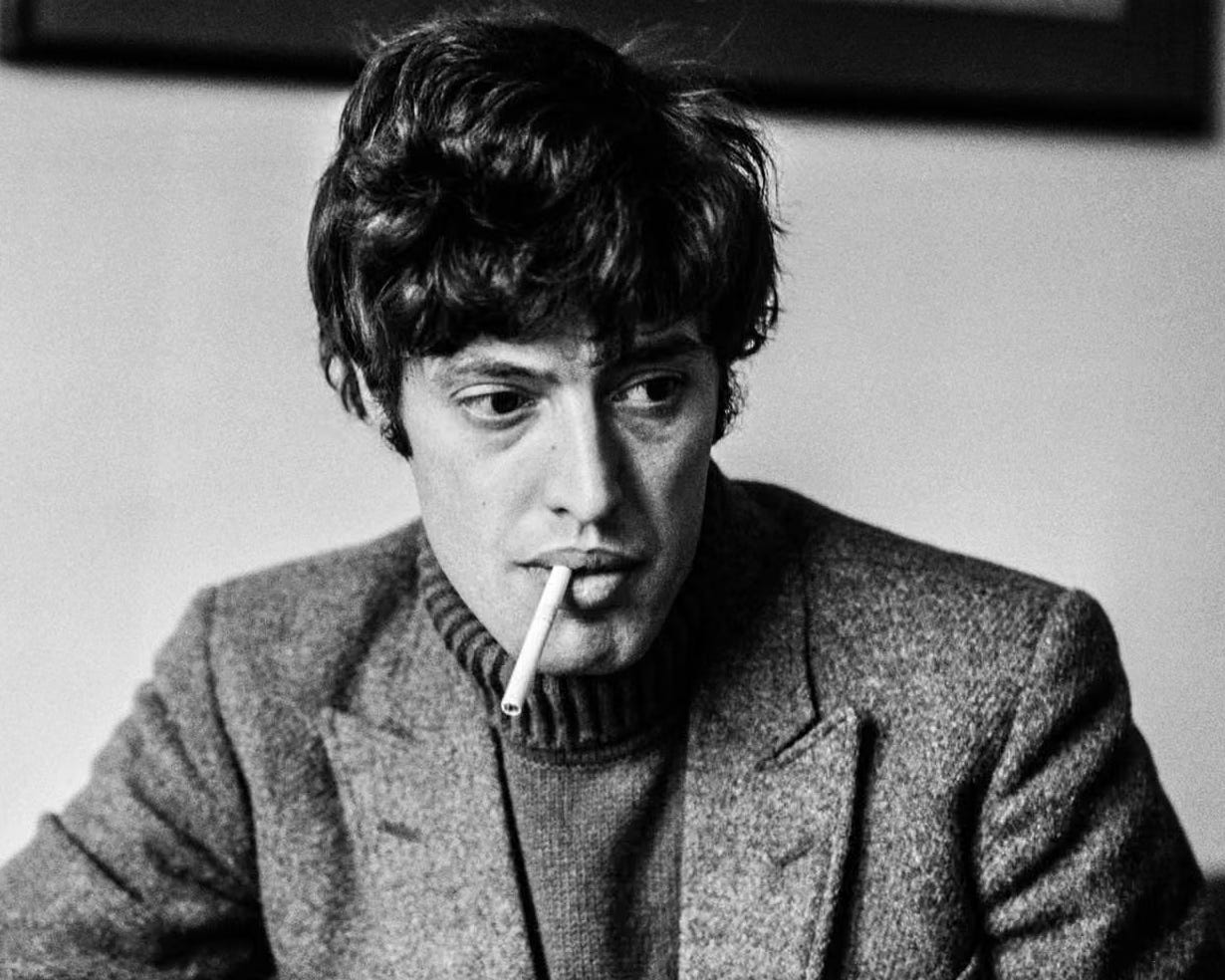
When I was 17 years old, I had the good fortune of being cast in a play called “Albert’s Bridge,” written by Tom Stoppard. I had never heard of this writer or this play, but I quickly gravitated toward his work. The deftness, intelligence and precision of his wordplay were music to my young ears.
I had never heard anything like it.
The play follows Albert, a recent philosophy graduate who lives in Bristol with his young family. Unable to get work in the bustling and lucrative field of philosophy, he takes a temporary job as a bridge painter. He falls in love with the simplicity of this work and decides that he would like to spend his life devoted to the maintenance of the bridge. “I saw more up there in three weeks than those dots (the people below) see in three years. It reduced philosophy and everything else,” he says.
His parents are not thrilled (“you could have had an office job with real prospects!”), urging him to choose a more conventional path.
Albert, being the very first overeducated and underemployed millennial underwhelmed with the world that he encounters, insists that he would simply like to paint the bridge. Soon, after the City Council decides it’s more economically efficient to just have one painter, Albert’s future is set out for him: start painting the bridge and, after finishing eight years later, begin again. This is the most Sisyphean of tasks and gives his philosophical mind plenty of time to think out loud. Topics include: the futility of existence, the wonders of structural engineering, form meeting function and the alienation of life under capitalism, among other things.
A sample:
ALBERT (dangling from the bridge, methodically painting): In eight years, who will I be? Not me. I’ll be assimilated then- the honest working man, father of three. You’ve seen him around- content in his obscurity, come to terms with public truths, digging the garden of the Council House in what is now my Sunday suit.
When a man, Fraser, climbs up the bridge in order to jump off, he and Albert engage in a dialogue that is both funny and high minded all at once- the Stoppard signature:
FRASER: Look down there! I came up because up was the only direction left! The rest has been filled up and is still filling. The city is a hold in which blind prisoners are packed wall to wall! Motorcars nose each other down every street and they are beginning to breed, spread! They press the people to the wall by their knees and there’s no end to it because if you stopped making them thousands of people would be thrown out of work and they’d have no money to spend- the shopkeepers would get caught up in it, the farms and all the people dependent on them with their children and all. There’s too much of everything! But the space for it is constant. So the shell of human existence is filling up, expanding and it’s going to go BANG!
ALBERT: You afraid of a little traffic?
Eventually, the City Council determines that old philosophical Albert is going too slow, they hire a team of bridge painters to finish the job quickly and he is forced to confront the mess of his life up close. He cannot stay up there forever.
I had a small part in this play (a city council man named Dave who was constantly throwing out nonsensical ideas and being told ‘shut up, Dave!’) and so I spent a lot of my time just listening. There were always new treasures to discover.
As a restless and rebellious young person, I deeply related to this play and this character. I did not know it was possible to give voice to these feelings that I was harboring inside and I certainly was unaware that someone could give voice to them with words that felt like a scalpel cutting through to emotional truth.
I felt seen.
My love for theater was born.
“Albert’s Bridge” was one of his earlier plays (maybe his first) and it was written originally for the BBC radio. He would write many others, including “Rosencrantz and Guildenstern are Dead” which is a high minded, clownish exploration of the doddering fools in Hamlet. It is hilarious and most definitely a nod to one of my all time faves- “Waiting for Godot.”
Stoppard led an extraordinary life. He was a Czechoslovakian born Jew who fled the Nazis as a young boy- first to India, then to England. His father died in World War II serving in the British Navy, leaving Tom more alone in the world with nothing but his love of words and thirst for knowledge. His mother, who I’m sure he loved, hid the family’s Judaism and past as refugees from him until late in his life, which he chronicles in his last play, “Leopoldstadt.” He was not a perfect person or playwright, of course, and some of his work is considered very pretentious- much as I am beginning to feel sitting here writing this very homage to him.
But he believed that words were “sacred. If you get the right ones in order you can nudge the world a little.” In an increasingly visual and Tik-Tok-ified world where attention spans are shortening daily and resources are dwindling, his writing is a breath of fresh, unpolluted air.
Thank you for nudging me, Tom.
You have exited the world but, as you once wrote, “every exit is simply an entry somewhere else.”
If you’d like, you can listen to “Albert’s Bridge” here: